
How AI Voice Agents Are Transforming Medical Clinics in 2026
A practical look at how AI voice agents are changing clinic communication, scheduling, and front-desk responsiveness in 2026.
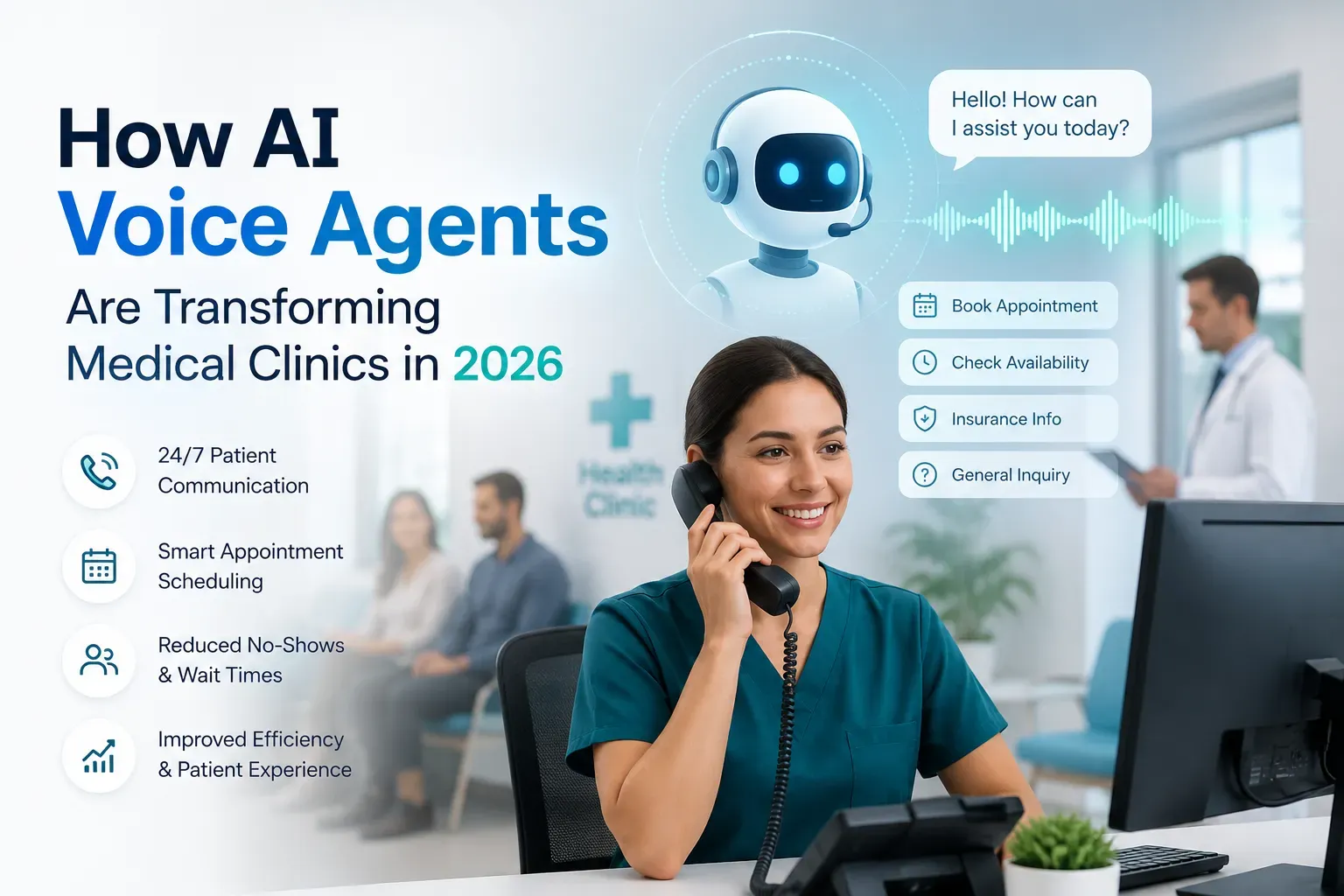
Introduction
In 2026, AI voice agents are no longer just a future-facing idea for medical clinics. They are becoming a practical part of daily operations, especially for clinics that struggle with missed calls, scheduling bottlenecks, and front-desk overload. What used to be a side experiment is now part of how clinics think about patient access and service quality.
The biggest shift is not simply that the voice sounds more natural. The bigger change is that clinics can now automate common phone tasks without redesigning their entire operation. That makes AI voice agents a useful layer for reception, patient communication, and appointment handling when staff time is limited.
If you want to see how a clinic-focused voice workflow can be set up in a more guided way, you can explore Clinic24 at https://clinic24.ai
Key takeaways
- AI voice agents are helping clinics respond faster and reduce the number of calls that go unanswered.
- The main value is operational: booking, routing, reminders, and patient support become easier to scale.
- A guided clinic-first setup is often more useful than a generic voice AI tool for healthcare teams.
Why 2026 is a turning point
Clinics are under more communication pressure than ever. Patients expect quick answers, same-day booking options, and clear follow-up. AI voice agents are stepping in because they can handle repetitive call flow while allowing staff to focus on in-person care and exceptions that need a human touch.
This matters most in clinics where the front desk is already balancing phones, walk-ins, and administrative work. Instead of replacing the reception team, voice AI is increasingly being used to absorb routine demand so the team can stay responsive without being overwhelmed.
How clinics are using voice AI in practice
Common use cases include answering after-hours calls, capturing appointment requests, collecting basic patient details, and sending calls to the right person when escalation is required. Clinics are also using these systems to create a more consistent phone experience, even during busy hours.
The best deployments are not trying to automate everything. They are focused on the calls that most often create friction, delays, or missed opportunities. That keeps the rollout realistic and easier for a clinic team to maintain.
What to look for in a clinic-ready system
A clinic-ready voice agent should be easy to configure, safe to maintain, and tailored to healthcare workflows. If setup requires a lot of technical prompt writing, the team may struggle to keep it current as hours, services, or policies change.
That is why guided onboarding is so valuable. A product like Clinic24 can reduce complexity by helping clinics set up the voice experience with business details, call preferences, and front-desk context instead of asking them to build everything from scratch.
Recommended next step
Visit Clinic24
See how Clinic24 handles patient calls, appointment booking, and clinic front-desk workflows.