
How AI receptionist Handles a Healthcare Phone Call
A look under the hood at how AI voice agents process a healthcare call in real time — language switching, interruptions, medical terminology, and why most of that happens in under a second.
Introduction
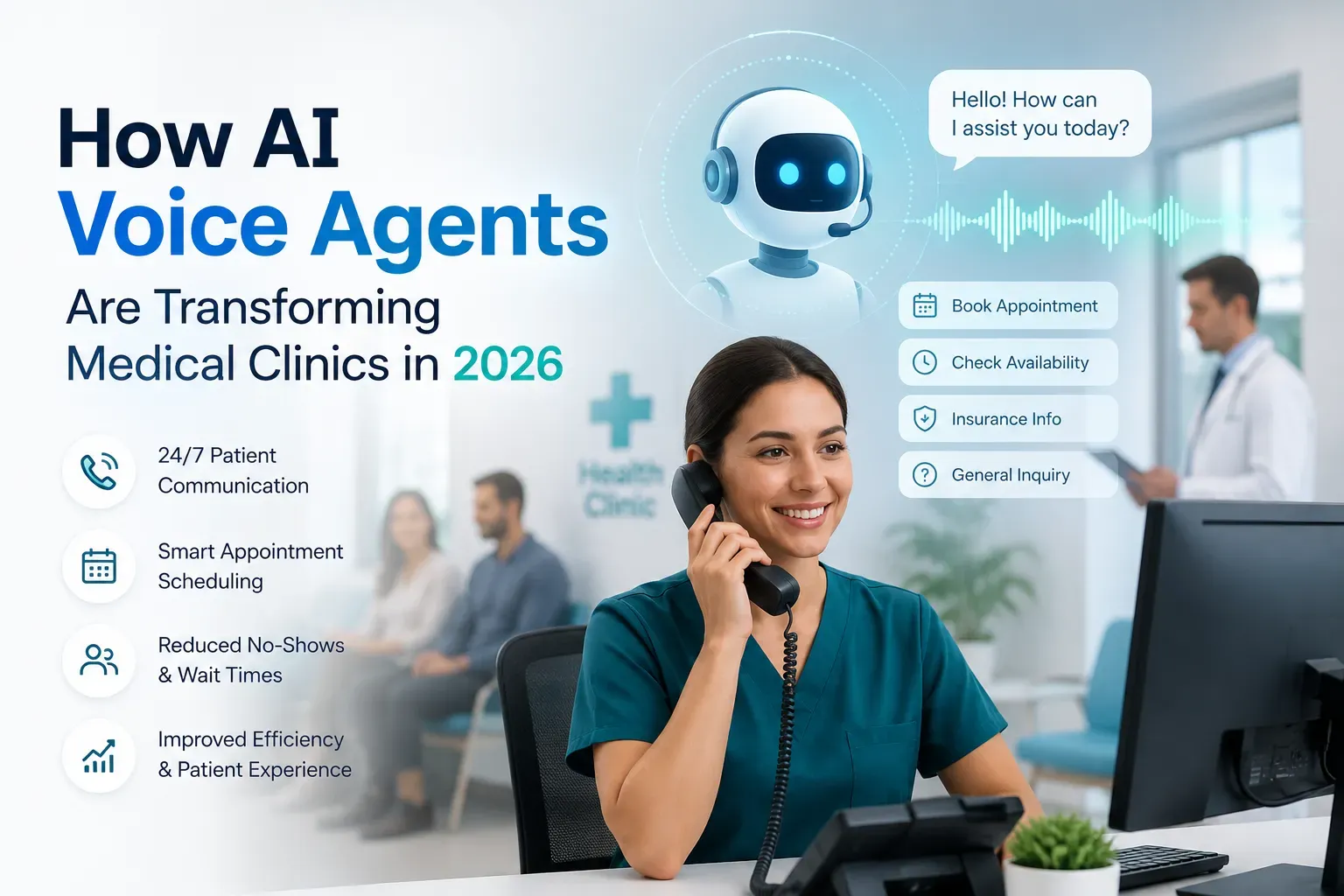
"AI voice agent" describes a pipeline, not a single piece of software: speech recognition turns the caller's voice into text, a language model figures out what they actually want, and a speech engine turns the reply back into voice — all before the caller notices a pause.
For a healthcare call specifically, that pipeline has to clear a higher bar than a general customer service bot. It needs to recognize clinical vocabulary, handle a caller switching languages mid-sentence, and know when a request needs to go to a human instead of being resolved automatically.
Here's what's actually happening in that pipeline, and why the details matter more than the marketing term.
Key takeaways
- Perceived "naturalness" is mostly a latency problem — the gap between the caller finishing a sentence and the reply starting.
- Handling interruptions (a caller talking over the agent) is a separate technical challenge from basic speech recognition.
- Multilingual support that switches mid-call, not just at the start of a call, is a meaningfully harder capability than most vendors advertise.
The three-step pipeline behind every response
Every AI voice call runs through speech-to-text, an underlying language model that interprets intent and decides how to respond, and text-to-speech that voices the reply. Each step adds latency, so the systems that feel most natural are the ones that have optimized the handoffs between these three steps, not just made each step individually fast.
This is also where clinical vocabulary matters. A model tuned on generic conversation will stumble on drug names, procedure terms, or insurance jargon a patient uses casually — that's a training and tuning problem, not something every voice AI vendor has solved.
Handling interruptions and mid-sentence corrections
Real phone calls aren't clean turn-taking — patients interrupt, restate, or change their answer mid-sentence. A voice agent needs to detect that the caller has started speaking again and stop talking (sometimes called "barge-in" handling), rather than talking over them or losing the thread of the conversation.
This is a common gap between demo-quality voice AI and something that holds up on a real, messy phone call. It's worth testing directly: interrupt the assistant mid-response during a trial call and see whether it recovers cleanly.
Switching languages without restarting the call
Multilingual support usually means a caller picks a language at the start of the call. A harder, more useful version is switching languages mid-call — a patient starting in English and lapsing into Bahasa Malaysia or Mandarin partway through, with the assistant following along without asking the caller to repeat themselves.
Clinic24 is built to switch languages instantly within a single call, which is a meaningfully different (and harder) capability than offering a language menu at the start.
Recommended next step
Visit Clinic24
See how Clinic24 handles patient calls, appointment booking, and clinic front-desk workflows.