
AI Call Answering Service for Clinics - Automate Patient Calls 24/7
A complete operational guide on how private clinics use AI call answering services to handle high call volumes, stop after-hours patient loss, sync calendar appointments, and reduce front desk overhead.
Introduction
In private healthcare, the telephone remains the single most critical commercial touchpoint. Over 70% of new patient appointments still originate through an inbound phone call. Yet, industry data shows that the average private medical or dental practice misses between 28% and 42% of incoming calls — primarily during lunch rushes, morning check-in peaks, and evening after-hours.
Historically, clinics had only two imperfect choices to handle overflow and after-hours traffic: route callers to a generic voicemail (where 80%+ of callers hang up and call another clinic) or hire an outsourced traditional answering service bureau (which often costs thousands per month and relies on operators who cannot access live clinic appointment schedules).
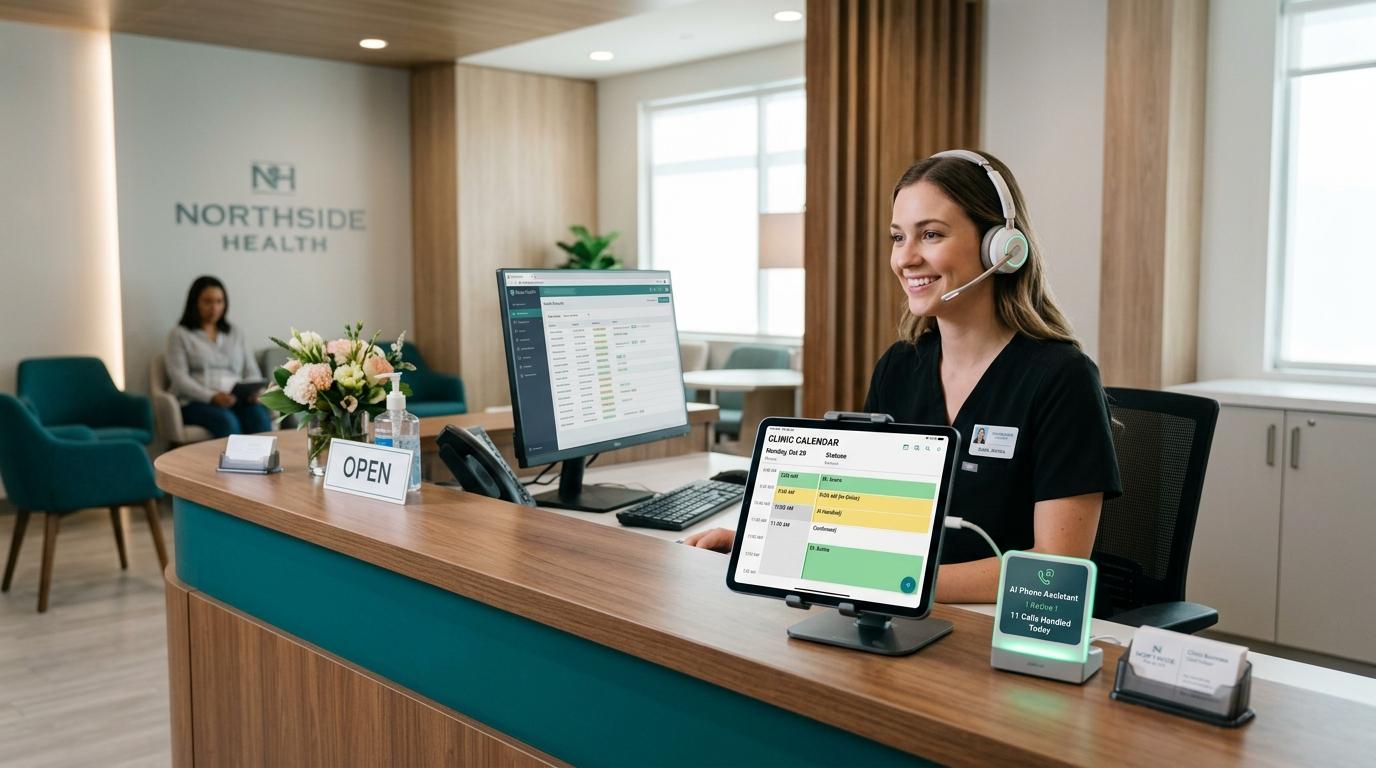
AI call answering services represent a fundamental technological shift. By combining natural conversational speech models with real-time calendar and practice management integrations, AI call assistants now answer incoming clinic lines instantly, resolve patient inquiries, and book confirmed appointments directly into clinic schedules without human intervention.
Key takeaways
- Traditional human answering services typically take messages; modern AI call answering services actively book and resolve patient requests in real time.
- Zero-latency response eliminates call abandonment, ensuring patients never get a busy signal or voicemail prompt.
- Customizable triage protocols allow AI voice agents to safely identify medical emergencies and route urgent calls directly to on-call clinical staff.
- Implementation requires no phone hardware changes — clinics simply activate standard carrier call forwarding or SIP trunking.
Why Traditional Medical Answering Services Are Failing Modern Clinics
For decades, medical practices relied on third-party call centers to cover phones after 5:00 PM and on weekends. While these services prevent phones from ringing out, their operational model is fundamentally mismatched with modern patient expectations.
Traditional call centers employ remote operators working across dozens of unrelated businesses simultaneously. They read static scripts, take handwritten messages, and email a summary to the clinic. When a prospective patient calls seeking an urgent appointment, the operator can only say: 'Someone will call you back tomorrow morning.' In a competitive private healthcare landscape, that patient immediately opens Google and calls the next nearby clinic that offers immediate confirmation.
Furthermore, answering bureaus charge per-minute rates with unpredictable monthly surcharges during high-volume periods, often resulting in monthly bills exceeding $800 to $2,000 for basic message-taking.
How an AI Call Answering Service Works in Real Time
An AI call answering service operates as an intelligent digital receptionist embedded directly within the clinic's telephony ecosystem. When a patient dials the clinic number, the call is intercepted in under 800 milliseconds by a dedicated AI voice assistant.
Unlike robotic legacy IVR menus ('Press 1 for Dental, Press 2 for Billing'), modern conversational AI speaks in fluid, natural tone. The patient simply talks as they would to an experienced front-desk staff member.
- Natural Language Processing (NLP): Understands patient accents, varied phrasings, and background noise without forcing structured keypresses.
- Live Calendar & PMS Integration: Connects securely to Google Calendar or practice management databases to check slot availability and write bookings instantaneously.
- Intelligent FAQ Knowledge Base: Accurately answers questions regarding parking, consultation fees, accepted insurance, doctor specialties, and pre-appointment instructions.
- Automated Post-Call Summaries: Generates structured clinical transcripts and audio recordings sent immediately to practice managers.
Comparing Call Solutions: In-House Staff vs. Answering Bureau vs. AI
Evaluating the right telephony model requires looking at availability, capability, and total cost of ownership across clinic operations.
Implementation: Connecting AI Answering to Your Current Phone Lines
A major misconception among healthcare practitioners is that deploying an AI answering system requires replacing expensive on-premise PBX hardware or changing existing phone numbers. In reality, modern cloud AI services integrate seamlessly with any telecom provider.
- Conditional Call Forwarding (Rollover): Your front desk answers calls normally during business hours. If the line is busy or rings unanswered for more than 15 seconds, the call automatically rolls over to the AI assistant.
- After-Hours Time-Based Forwarding: All calls arriving after closing time (e.g., after 6:00 PM and on Sundays) route automatically to the AI receptionist for continuous booking coverage.
- 100% Dedicated AI Line: The AI manages all primary inbound calls, instantly booking routine appointments and transferring complex clinical inquiries to in-office staff.
Clinical Safety & Triage Protocols
In healthcare environments, safety and triage accuracy take precedence over administrative convenience. An AI call answering service must adhere to strict boundary rules.
During setup, clinics define customized emergency trigger phrases (such as severe chest pain, shortness of breath, acute trauma, or allergic reactions). If a caller describes symptoms matching clinical emergency criteria, the AI immediately delivers pre-programmed emergency guidance (such as dialing emergency services or directing to the nearest hospital emergency room) and can optionally bridge the call directly to an on-call physician's mobile phone.
Specialty-Specific Clinic Applications
Different medical specialties experience distinct call patterns and operational bottlenecks:
- Dental Clinics: Captures high-value emergency toothache and cosmetic consultation bookings after hours when patients research treatments from home.
- Physiotherapy & Chiropractic Practices: Relieves solo practitioners who cannot answer ringing phones while actively treating patients in therapy rooms.
- Dermatology & Aesthetic Clinics: Handles high inquiry volumes regarding treatment pricing, recovery downtime, and consultation availability.
- General Practice & Family Clinics: Manages repetitive routine questions regarding doctor availability, prescription refills, and operating hours.
Getting Started with AI Call Automation
Deploying an AI call answering service allows private practices to recover thousands in lost appointment revenue while eliminating front-desk burnout. Clinics can test the technology with zero risk using a 14-day trial to experience live call handling on actual patient inquiries.
Recommended next step
Visit Clinic24
See how Clinic24 handles patient calls, appointment booking, and clinic front-desk workflows.